
The Horizon Europe project presents its progress in developing innovative fast-response energy storage technologies for waterborne transport, while preparing for its next major milestone: demonstration in a real maritime environment.
The POSEIDON project (POwer StoragE In D OceaN) has released its official project video, offering an insight into the technological developments, collaborative efforts and progress achieved as the initiative approaches its final implementation stages.
Funded by the European Union under Horizon Europe and coordinated by the Naval and Maritime Technology Centre (CTN), POSEIDON is exploring the potential of innovative fast-response energy storage systems to support the transition towards cleaner and more efficient waterborne transport.
The newly released video takes viewers through the project’s technological journey, from the development and testing of individual energy storage solutions to their integration into a containerised demonstrator designed for maritime applications.
Video 1 – POSEIDON official video
Three innovative technologies, one integrated system
At the heart of POSEIDON are three fast-response energy storage technologies, each being developed and tested to assess its performance and suitability for maritime applications:
Kinetic Energy Storage System (KESS): A flywheel-based solution that stores energy in the form of rotational motion.
Superconducting Magnetic Energy Storage (SMES): A technology that stores energy in the magnetic field generated by a superconducting system.
Electrostatic Energy Storage System (EESS): A supercapacitor-based technology designed to store and release electrical energy.
The project is investigating how these complementary technologies could address the demanding power requirements of modern vessels.
Beyond their individual development, an important part of POSEIDON involves integrating the three systems into a common electrical architecture. The Grid Converter provides a key electrical interface to support their integration and operation within the POSEIDON demonstrator.
This integration process represents a significant step towards bringing the technologies together in a containerised system designed for testing and validation in a relevant marine environment.
Beyond technology development: Assessing maritime applicability
POSEIDON’s ambition extends beyond the development of innovative energy storage hardware.
The project is also examining the technical, economic, environmental and regulatory factors that could influence the future adoption of fast-response energy storage systems in the maritime sector.
These activities include the assessment of cost-competitiveness, lifecycle performance, integration with other technologies, safety requirements and potential regulatory considerations.
By combining technological development with these complementary assessments, POSEIDON aims to generate valuable knowledge about where and how fast-response energy storage could contribute to future vessel operations
The next milestone: from the demonstrator to the vessel
As POSEIDON enters its final implementation phase, attention is increasingly shifting towards system integration, validation and demonstration under real maritime conditions.
One of the project’s next major steps will involve bringing the integrated system into an operational maritime environment, with onboard integration and demonstration activities planned aboard a Baleària vessel.
This stage will be particularly important for assessing the technologies’ performance in the context of a real vessel and advancing understanding of their potential applications in waterborne transport.
As the project approaches its scheduled completion in November 2026, the consortium is working towards its final validation and demonstration activities, which will contribute to the project’s technical, economic and safety findings.
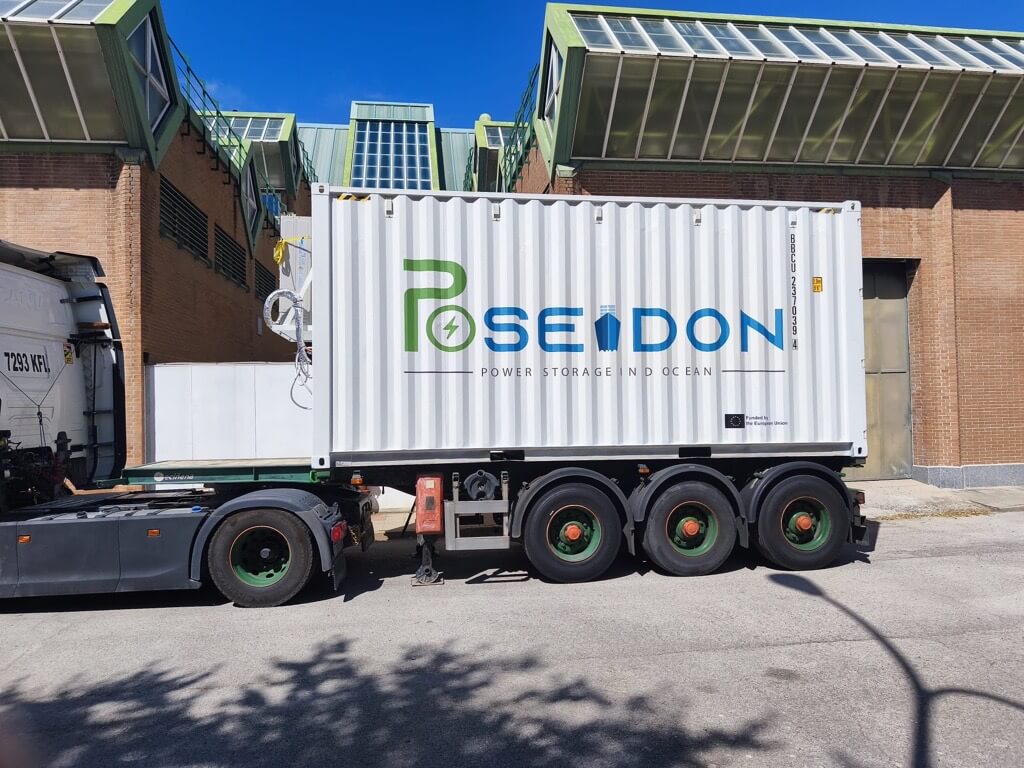
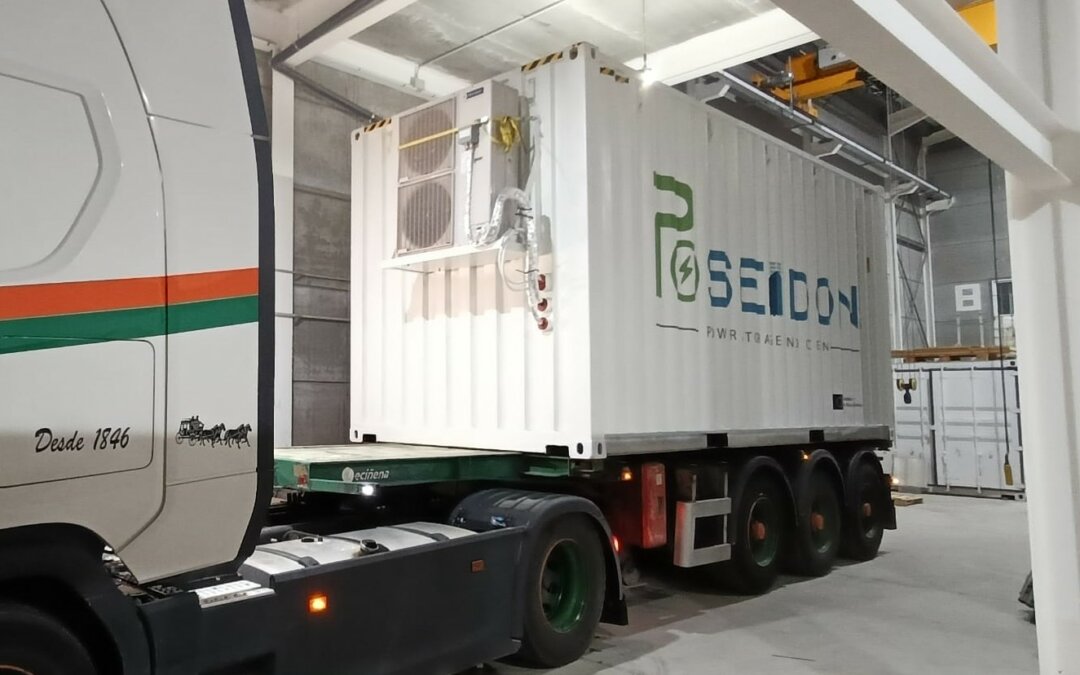
Image 1 – The POSEIDON container prepared for transport towards the next phase of integration and testing.
What comes next?
The next steps focus on integrated testing and preparation for onboard validation. Under the POSEIDON methodology, the container will support the progression from land-based integration to harbour and navigational trials, allowing the consortium to gather evidence from increasingly representative operating conditions.
Follow POSEIDON’s project updates to see the demonstrator move from integration and texting towards onboard validation.